

Company bio & history
Thirty years of warehouse floors, owned by the people on them
CRC Global is a privately held family of operating companies. This is where it came from, how it is structured, and what private ownership actually changes day to day.
The short version
A warehouse operator that kept adding the capability its customers were missing
CRC did not start as a holding company with divisions drawn on a whiteboard. It started as warehouse operations for enterprise shippers, and each company under the CRC name exists because customers kept asking us to solve the next problem in front of them — moving the freight, repacking the product, leasing the space, building the building, maintaining it afterward.
That order matters. Transportation, repacking, leasing, construction, realty, property management, and brand services all report back to the same discipline the warehouse floor demands. The result is one operator accountable end to end, rather than a broker coordinating other people's promises.
Ask usWant the detailed company record — the Crossroads-era origins, the transition to CRC, and who runs the operation today? Ask us and we'll make the introductions.
At a glance
- 30+
- Years of enterprise warehouse operations, Crossroads era forward
- Coast to coast
- Warehouse locations across the United States, from 10K to 600K sq. ft., plus IOWS and lay down yards
- 7
- Operating companies under the CRC name
- 100%
- Privately held — no outside investors, operator-led decisions
How we got here
Five chapters, one operating standard
The Crossroads era
Enterprise warehouse operations, learned the hard way
The teams that became CRC built their reputation running high-volume warehouse and distribution operations under the Crossroads name for enterprise shippers. That work set the operating standard the company still runs on: accurate counts, disciplined inventory control, and honest reporting when something goes wrong. Customers from that era still reference it more than thirty years later.
Becoming CRC
One operator instead of a broker chain
Rather than subcontract the hard parts, CRC brought them in house — warehouse labor, a dedicated fleet alongside brokerage capacity, and repacking and kitting lines. Owning the racks, the drivers, and the packaging equipment meant accountability stopped moving down a chain of vendors.
Specializing
Product types most 3PLs turn away
Agriculture, technology, chemicals, and food-grade goods each carry their own handling rules. CRC built its operation around those rules instead of making exceptions for them, and developed its own agricultural equipment and process IP — including The Grappler and the soybean wash — to serve ag customers other providers could not.
Vertical integration
Buy it, build it, lease it, run it
CRC Building Solutions, CRC Realty, and CRC Property Management were added so a facility could be sited, constructed, leased, maintained, and operated by the same organization. Self-performed work removed the handoffs that normally slow a warehouse start-up or expansion.
Today
A coast-to-coast warehouse network and a consulting practice
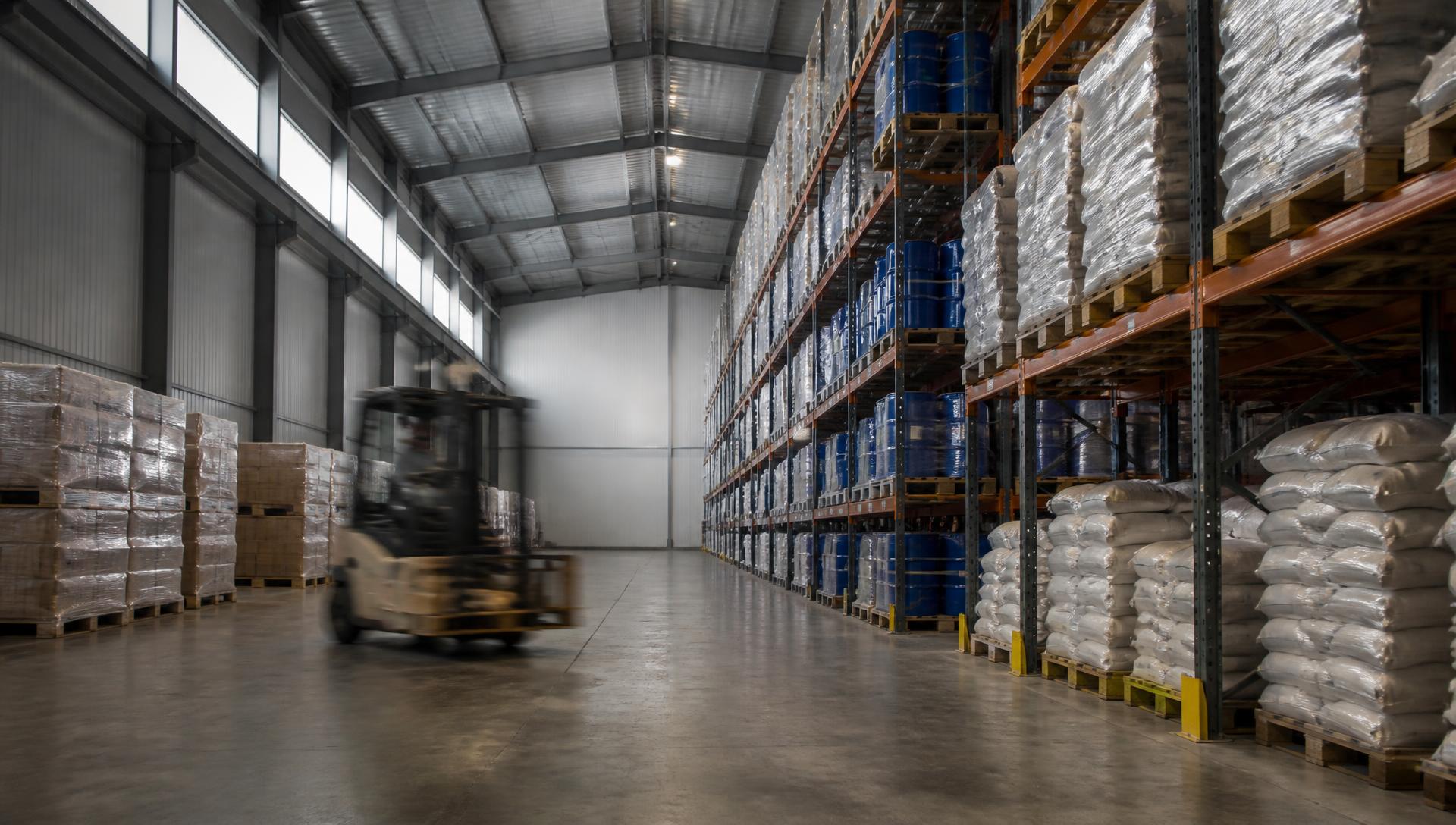
CRC operates warehouses across the United States from its headquarters in Kenner, Louisiana, with facilities ranging from 10,000 sq. ft. to 600,000 sq. ft., plus industrial outdoor warehouse space (IOWS) and lay down yards. The company now packages what it learned running those buildings into warehouse operations consulting for enterprise clients who run their own networks.
Ownership
What private ownership changes in practice
Decisions sit with the operators
The people running the buildings, driving the lanes, and building the facilities make the calls on their work. Problems get raised early because nobody is protecting a quarterly number for an outside shareholder.
Long-horizon investment
Racking, equipment, tractors, and facility upgrades are funded on the life of the account, not on an exit timeline. It is why CRC stays in accounts for decades.
Retention customers can feel
Private ownership keeps experienced crews in the same buildings. The person who knows your product this year is generally the person who knows it next year.
Ask usAsk us how our operating structure works in practice and what crew tenure looks like at the building that would run your freight.
Core value
HEATKTE
High Expectations Are The Key To Everything
It is the standard we hold ourselves to before we ask a customer to hold us to it — in the warehouse, on the road, on the job site, and in the community. It is also the simplest explanation for why the company kept expanding: every new capability came from refusing to hand a customer a half answer.
Giving back
A percentage of CRC revenue funds We Care We Share
The program gives back to local communities, positively impacts organizations, and delivers real support to individuals. It is funded off the top of the business rather than out of a leftover marketing budget, which is only possible because the company answers to no outside investors.
The family of companies
Seven companies, one accountability line
CRC Logistics
Third-party warehouse operations across the United States, plus supply chain management.
CRC Transportation
Dedicated self-performed fleet paired with brokerage capacity for overflow and long lanes.
CRC Repacking
Repack, kitting, labeling, and bag/box/bulk lines run inside our own buildings.
CRC Building Solutions
Design-build and construction management for warehouse and industrial facilities.
CRC Realty
Commercial and industrial real estate brokerage, including site selection.
CRC Property Management
Self-performed leasing, maintenance, and capital improvements on the properties we hold.
Also part of the family: CRC Brand Solutions for brand, marketing, and creative work. More about CRC.
Tell us what you need moved, stored, or built.
Talk to a CRC operations lead about your product, volumes, and service window. We answer with specifics, not brochures.